11 October 2026
Cloudy periods. Showers clearing this morning, but returning at night. Northwesterlies developing this morning.
Loading outdoor place details…
Waitākere Ranges Regional Park
Zion Hill Loop is a 4.5-hour loop walk that combines Zion Hill Track with sections of the historic tramway route through the sand dunes. The walk includes sustained gradient climbs and extended sections of soft sand through the dunes, making it physically demanding and suitable for walkers with a good level of fitness.
Distance
11.67 km
Walking time
4 hrs 30 mins
Difficulty
Intermediate
Dogs
On-lead only
Wheelchair access
Not marked friendly
Current status
No active alerts found. Conditions can still change, so check again before leaving.
Weather outlook
Issued 11 Oct 2026, 11:03 am
11 October 2026
Cloudy periods. Showers clearing this morning, but returning at night. Northwesterlies developing this morning.
12 October 2026
Mostly cloudy with isolated showers, becoming widespread for a time in the afternoon. Northwesterlies.
13 October 2026
Mostly cloudy with isolated showers, clearing to fine in the morning. Northwesterlies.
14 October 2026
Mostly cloudy with isolated showers, clearing to fine in the morning. Northwesterlies.
15 October 2026
A few showers, turning to rain for a time. Northerlies, turning westerly in the morning.
Regional guidance only; elevation and terrain can produce different conditions.
Explore the area
Explore the track route and surrounding area before you set out.
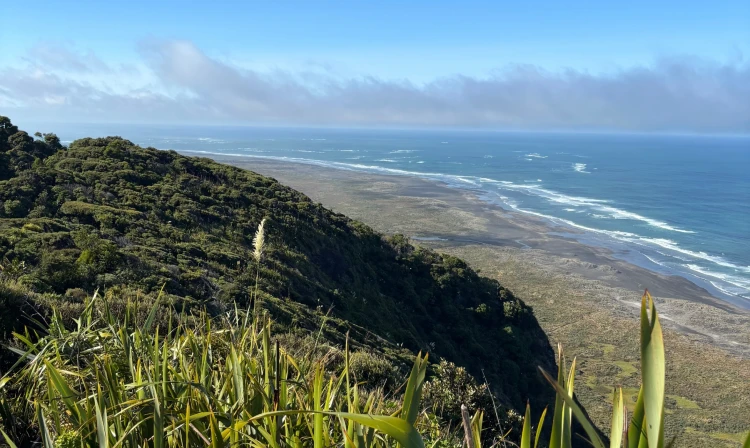
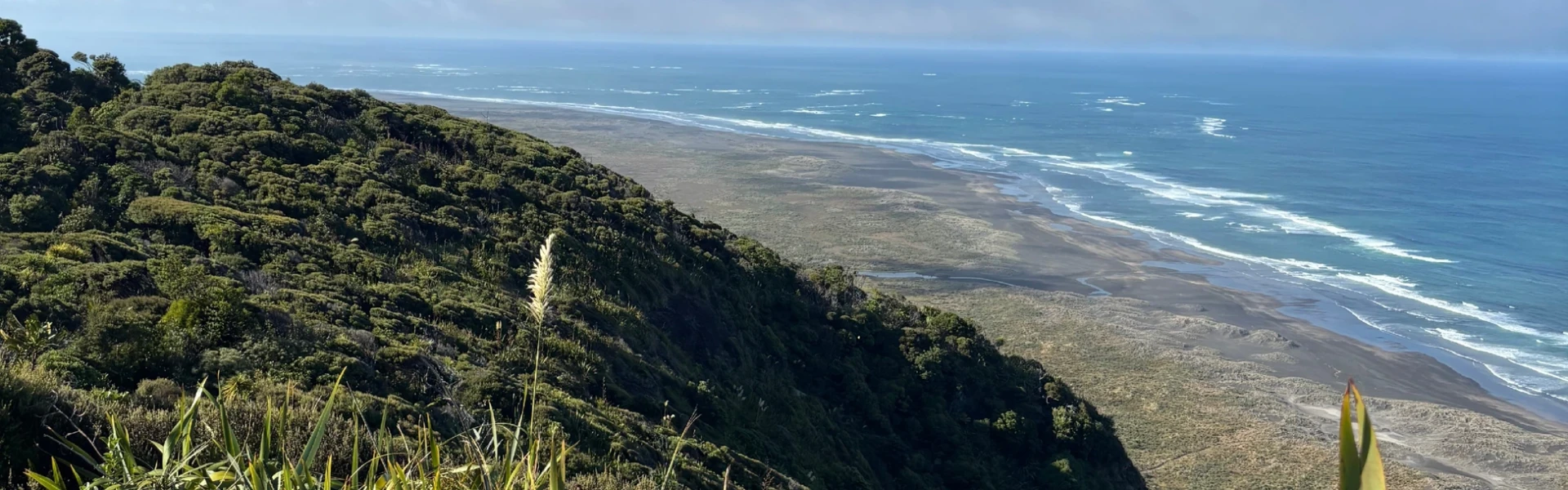
Zion Hill Loop is a 4.5-hour loop walk that combines Zion Hill Track with sections of the historic tramway route through the sand dunes. The walk includes sustained gradient climbs and extended sections of soft sand through the dunes, making it physically demanding and suitable for walkers with a good level of fitness. The walk starts with a five-minute walk from the Karekare car park toward Pōhutukawa Glade. From here, Zion Hill Track climbs steeply through regenerating coastal forest toward Mount Zion. Near Mount Zion, there are sweeping views of the rugged west coast, including Karekare Beach, surrounding headlands, and the Tasman Sea. Continuing beyond Mount Zion, the track provides views over the wetlands and beach below. Sections of the historic tramway alignment can be seen running through the wetlands and dunes. The track then winds through small gullies filled with nīkau palms and other coastal vegetation as it descends toward Pararaha Valley. Shortly beyond a kauri dieback cleaning station, the track reaches a junction with Pararaha Valley Track. Turn right toward the beach and follow the sandy track leading to Tunnel Point Campground. Dogs are allowed on a lead on Zion Hill Track but cannot go onto Pararaha Valley Track into the sand dunes, as this area is within the scientific reserve. Dog walkers can complete the track as a point-to-point walk and return along Zion Hill Track to Pōhutukawa Glade. From Tunnel Point Campground , pass through the historic tunnel and follow the old tramway route along the coast. Walk along Karekare Beach, then take the first track through the sand dunes beside the large coastal cliffs overlooking the beach. This track returns to Pōhutukawa Glade, completing the loop.
This track is physically demanding, with steep climbs and soft sand sections. Walkers should have a good level of fitness and wear sturdy footwear. Some sections may be slippery after rain. Take care near cliff edges, and be aware that exposed sections can be windy. Animals: Dogs are allowed on leash on Zion Hill Track but not on the coastal section . Smokefree regional parks: Our regional parks are smoke-free. Waste: All our regional parks are rubbish free. Take all rubbish and recycling with you when you leave. Outdoor fires: It is illegal to light a fire outside in all public areas in the Auckland region. For more information about the park and track, head to the Auckland Council website .
To help protect native kauri trees from kauri dieback disease, all walkers are required to clean their footwear before entering the track. Use the cleaning station provided to thoroughly scrub and disinfect your boots. When visiting areas with healthy kauri trees, please make sure you follow these steps: Clean your footwear, tyres and equipment before and after visiting our kauri forests. If you are walking your dog, you should also make sure you clean their paws. Use cleaning stations every time you pass one while you are walking in a park. Stay on the tracks and keep off kauri roots. Stay away from closed tracks. Don't remove soil from, or bring soil into, areas with kauri trees.
Pararaha Valley Campground is a g rassed campground at the foot of a hill with an open shelter. There is a composting toilet and water is available from the stream. Boil before use. Tunnel Point Campground is a basic grassed campground situated between dune wetlands and coastal cliffs.
The track starts from Karekare Carpark. After parking, cross the bridge on Lone Kauri Road and you'll see the track entrance on your right. Use this location in Google Maps to find your way there.
Follow the New Zealand Land Safety Code: • Plan your trip – know the route, check weather conditions, and allow enough time. • Tell someone – inform a trusted person of your plans. • Be aware of the weather – conditions on the west coast can change quickly. • Know your limits – choose tracks suitable for your fitness and experience. • Take sufficient supplies – carry food, water, and warm, waterproof clothing. We encourage you to continue gaining the skills and knowledge required for a safe trip. The NZ Mountain Safety Council has lots of free resources and information you can use. These can be accessed via www.mountainsafety.org.nz . Level up in your outdoor knowledge with these interactive online learning tools: Trip Planning Tramping / field Skills Basic Navigation River Safety Additionally, check out the range of helpful videos available from the NZ Mountain Safety Council YouTube channel .
On leash
Track information, access and weather can change. Confirm current alerts and land-manager information close to departure, tell someone your plans, and carry equipment appropriate for the route and conditions.